2026 Top Performance Fabric Trends for Global Buyers?
As the demand for Performance Fabric grows, trends are rapidly evolving. According to a report by Grand View Research, the global performance textiles market is projected to reach $20.8 billion by 2025. This high demand reflects a shift towards advanced fabrics in various industries, including fashion and sportswear.
Expert Dr. Emily Chen, a leading authority in textile innovation, states, “The future of performance fabrics lies in their ability to adapt to consumer needs and sustainability.” This insight highlights the growing interest in eco-friendly materials without compromising quality. Brands are now seeking high durability, moisture-wicking properties, and breathability, all crucial features for modern consumers.
Yet, challenges remain. Many companies struggle to balance innovation and cost. Some producers may prioritize profit over quality, resulting in subpar products. As global buyers navigate these complexities, identifying reliable partners becomes essential. The 2026 trends will reflect not only advances in technology but also the industry's commitment to sustainability and performance.

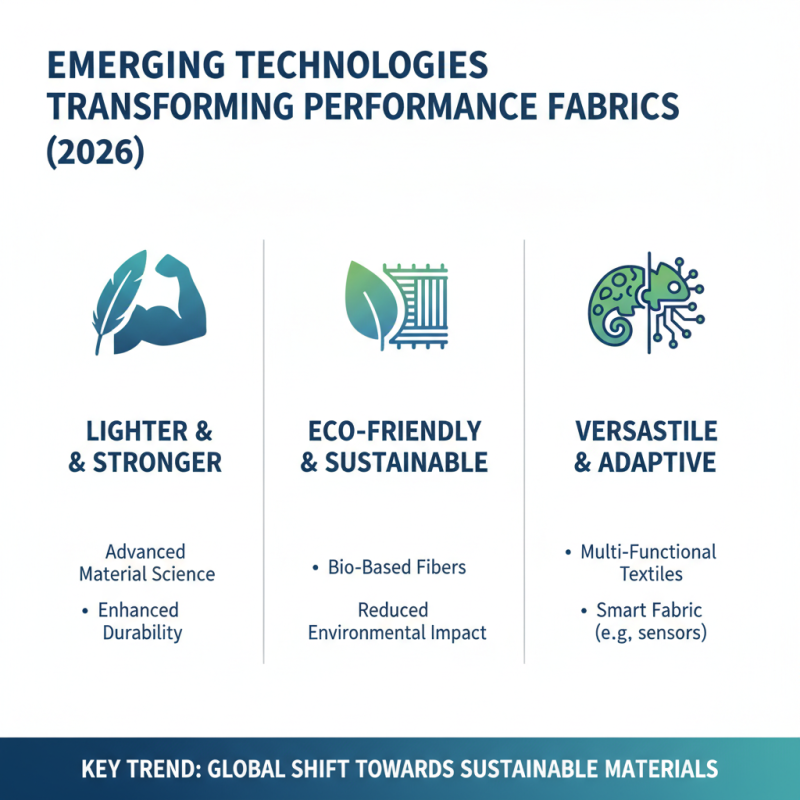
Emerging Technologies Impacting Performance Fabrics in 2026
Emerging technologies are set to transform performance fabrics by 2026. Innovations in materials science are leading to textiles that are lighter, stronger, and more versatile. For instance, bio-based fibers may replace synthetic ones, providing eco-friendly options without sacrificing durability. This shift towards sustainable materials is a crucial trend for global buyers.
Smart textiles are also on the rise. Fabrics will integrate sensors and data processing capabilities, allowing for real-time monitoring of physical conditions. These innovations can enhance comfort and safety, making them ideal for various applications, from sportswear to medical textiles. However, understanding the implications of data privacy will be essential.
**Tip:** When sourcing performance fabrics, prioritize suppliers with a commitment to sustainable practices. This ensures that your products are not only high-quality but also environmentally responsible.
3D knitting technology is another area to watch. It allows for the precise creation of complex designs while minimizing waste. This process can lead to efficient production cycles and customizable products. Yet, buyers should be aware of potential limitations in design flexibility.
**Tip:** Emphasize collaboration with manufacturers who are experimenting with innovative techniques. This approach can lead to unique products that stand out in a crowded market.
Sustainability Practices Shaping Fabric Trends for Global Buyers
Sustainability is reshaping the fabric industry. Designers and manufacturers are becoming more aware of their environmental impact. They are exploring new materials that reduce waste and pollution. Recycled fibers are gaining traction. These fabrics are created from post-consumer waste, significantly lowering resource consumption.
Biodegradable materials are another focus. They break down naturally, reducing landfill waste. Innovations in dyeing processes also play a role. Companies aim for less water usage and harmful chemicals. This shift requires a commitment to transparency in sourcing and production. Buyers increasingly want to know the origins of their textiles.
However, challenges remain. Not everyone can access sustainable options. The cost of eco-friendly textiles can be higher. Education is crucial for both buyers and producers. Understanding the benefits of sustainable fabrics takes effort. The journey towards sustainable practices is ongoing, and not without its hurdles.
Key Market Demands Driving Innovations in Performance Textiles
The performance fabric market is evolving rapidly. Buyers are increasingly looking for textiles that meet their specific needs. Key market demands are shaping innovations in this sector. Sustainability is at the forefront of these trends. Many consumers prefer eco-friendly materials, which is driving manufacturers to explore natural fibers and recycled options. These choices often come with enhanced durability too.
Another trend focuses on the versatility of fabrics. Buyers want textiles that can perform in various environments. For example, fabrics that resist water, stains, and UV rays are gaining popularity. This versatility opens up new possibilities for outdoor gear and home textiles. Yet, there may be challenges in balancing performance and comfort. Some high-performance fabrics might sacrifice breathability, which can impact user experience.
Moreover, technological advancements play a crucial role. Smart textiles, which monitor conditions and improve user comfort, are growing in demand. Buyers expect fabrics to adapt to their needs. However, there can be skepticism about the reliability of these innovations. Not all technologies work seamlessly, leading to a need for continuous improvement in this dynamic market. Addressing such concerns is essential for long-term success in the performance fabric industry.
Consumer Preferences Influencing the Future of High-Performance Fabrics
The landscape of high-performance fabrics is rapidly evolving, driven by consumer preferences. Research indicates that nearly 80% of consumers prioritize sustainability in their purchasing decisions. They increasingly seek materials made from recycled sources or those that minimize environmental impact. This trend is pushing manufacturers to innovate and adapt.
Recent data from market analysts reveal that sales of eco-friendly fabrics grew by over 25% in the last year. Yet, while many brands claim to be sustainable, transparency remains a challenge. Studies show that consumers often struggle to find reliable information about fabric origins and chemical treatments. This confusion can lead to skepticism and potential backlash against brands perceived as “greenwashing.”
Moreover, functionality has become paramount. As active lifestyles gain popularity, about 70% of consumers report a desire for fabrics that offer moisture-wicking, breathability, and durability. However, balancing these performance features with sustainable practices is not straightforward. Many manufacturers face hurdles in sourcing viable sustainable materials that do not compromise on quality. While the path forward is complex, the industry must commit to genuine innovation that aligns with consumer values.
2026 Top Performance Fabric Trends for Global Buyers
| Fabric Type |
Key Features |
Sustainability Rating |
Consumer Preference (%) |
| Recycled Polyester |
Durable, Moisture-wicking |
High |
65% |
| Organic Cotton |
Soft, Breathable |
Very High |
70% |
| Merino Wool |
Thermoregulating, Odor-resistant |
Medium |
60% |
| Bamboo Fiber |
Antimicrobial, Biodegradable |
High |
68% |
| Tencel (Lyocell) |
Soft, Moisture-absorbent |
Very High |
75% |