inquiry
Inquiry
Form loading...

Why Choose Polyester Spandex Fabric for Global Sourcing?

Global sourcing teams are under pressure to balance price, performance, and responsible production. Polyester Spandex Fabric offers a practical response because it combines polyester’s strength with spandex’s controlled stretch. The result is fabric that can support activewear, uniforms, swimwear, and fitted travel garments. It feels different in the hand: smooth, resilient, and less likely to lose shape after repeated movement.

The business case is substantial. Textile Exchange’s Materials Market Report 2024 states that polyester represented approximately 57% of global fiber production in 2023, making it the dominant fiber worldwide. The same report records global fiber production at about 124 million tonnes. This scale supports broad mill availability, consistent specifications, and competitive sourcing options across major manufacturing regions. Grand View Research also identifies continuing growth in the global spandex fiber market, driven by sportswear, athleisure, and performance clothing demand. These figures do not guarantee a good supplier. They simply show why this blend remains commercially important.

Technical evaluation still matters. Buyers should compare stretch recovery, abrasion resistance, colorfastness, fabric weight, and pilling results. Request laboratory reports, production samples, and clear fiber-content declarations. OEKO-TEX STANDARD 100 certification may provide additional chemical-safety assurance, but certification scope must be checked carefully. Recycled polyester can reduce reliance on virgin feedstock, although traceability and actual environmental benefits require verification. That part is easy to overlook. Polyester Spandex Fabric is not automatically the most sustainable option. Yet, with documented testing, experienced mills, and transparent sourcing practices, it can deliver dependable performance at global scale.

Why Choose Polyester Spandex Fabric for Global Sourcing?

What Is Polyester Spandex Fabric?

Polyester spandex fabric is a blended textile made from polyester and elastic spandex fibers. Polyester provides strength, shape retention, and quick drying. Spandex adds stretch and recovery. The blend may contain different ratios, such as 90% polyester and 10% spandex. Knitted versions feel smooth and flexible, while woven versions often offer firmer support. Its surface can be matte, shiny, brushed, or lightly textured.

For global sourcing, this fabric suits activewear, swimwear, uniforms, and fitted garments. It handles repeated movement and usually resists wrinkles during shipping. However, performance depends on fiber quality, knitting tension, dyeing, and finishing. A fabric can feel soft but lose recovery after washing. That is not ideal. Buyers should request test samples and check stretch, recovery, colorfastness, pilling, and shrinkage. Fabric weight also matters. A lightweight sample may become transparent under strong light. In practice, clear specifications prevent costly misunderstandings.

Tips: Compare samples after three washes. Measure width before and after testing. Confirm the spandex percentage and fabric weight. Ask for laboratory reports when performance claims affect product safety or durability. Small flaws can reveal larger production risks.

How Polyester and Spandex Work Together

Why Choose Polyester Spandex Fabric for Global Sourcing?

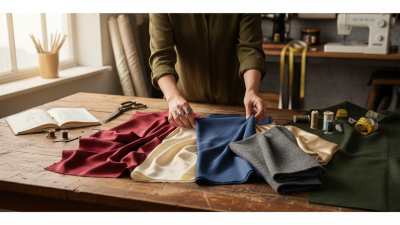
Polyester and spandex work together by dividing performance tasks. Polyester provides strength, color retention, and quick drying. Spandex supplies stretch and recovery, helping fabric follow body movement. In a well-balanced blend, the fabric feels stable without becoming stiff. This matters for activewear, uniforms, travel clothing, and fitted garments.

The ratio changes the final result. A small amount of spandex can improve comfort, while a higher percentage creates stronger stretch. However, more stretch is not always better. I have seen fabrics feel impressive during fitting but lose recovery after repeated washing. Testing should include stretch, recovery, pilling, colorfastness, and dimensional stability. Use real samples.

Manufacturers should also examine yarn quality, knitting structure, fabric weight, and finishing methods. These details affect sewing, cutting, drying speed, and long-term wear. Polyester usually supports efficient production because it handles moisture and abrasion well. Spandex needs careful heat control during processing and pressing. Excessive heat may reduce elasticity. That risk is easy to overlook. Suppliers should provide test records and clear blend specifications, not vague performance claims. A practical sourcing review should compare laboratory results with actual wear trials. Neither method is perfect alone.

Why Choose Polyester Spandex Fabric for Global Sourcing?
How Polyester and Spandex Work Together
Data Dimension Polyester Spandex / Elastane Why the Blend Is Valuable
Primary role in fabric Structural base fiber that provides durability, dimensional stability and easy care. Highly extensible performance fiber used in relatively small percentages. Polyester supplies the fabric body while spandex adds controlled stretch and recovery.
Typical fiber density Approximately 1.38 g/cm³. Approximately 1.20–1.30 g/cm³, depending on polymer formulation. A polyester-rich blend can maintain a relatively light structure while improving fit and mobility.
Moisture regain at standard conditions Low, commonly around 0.4%. Low, commonly around 1.0–1.3%. The blend dries faster than many moisture-absorbent natural-fiber fabrics, although wicking depends on yarn, knit structure and finishing.
Stretch capability Limited natural stretch; mechanical stretch may be engineered through yarn or fabric construction. Can commonly extend several times its original length; exact elongation varies by grade and test method. Small amounts of spandex can create comfortable 2-way or 4-way stretch without making the fabric excessively heavy.
Shape recovery Good dimensional stability and relatively low shrinkage when properly heat-set. Provides elastic recovery, but performance can decline with excessive heat, chlorine, oils and prolonged UV exposure. The polyester base helps retain garment dimensions while spandex supports close-fitting silhouettes.
Abrasion resistance Generally high, supporting repeated wear and laundering. Usually not selected as the main abrasion-resistant component. Polyester improves durability in activewear, uniforms, swimwear and fitted garments.
Wrinkle resistance Generally good because of the fiber’s resilient thermoplastic structure. Contributes elasticity rather than primary wrinkle resistance. The blend is suitable for travel, uniforms and garments requiring a neat appearance after packing.
Drying behavior Dries relatively quickly because it absorbs little moisture. Does not absorb large amounts of water, but can slow drying when used in dense or heavy constructions. A lightweight polyester-rich construction can support quick-dry product positioning.
Color and print performance Disperse dyes are commonly used; colorfastness can be strong when dyeing and finishing are controlled. Requires compatible dyeing and heat-setting conditions to avoid shade variation or elastic damage. The blend supports vivid sportswear colors, but lab-dip approval and stretch-condition testing remain important.
Common blend ratios Typical base: 85–95% polyester. Typical performance addition: 5–15% spandex. Examples include 95/5 for moderate stretch, 90/10 for balanced comfort, and 85/15 for higher stretch. Actual performance depends on fabric construction.
Best-fit applications Sportswear, uniforms, outer layers, linings and everyday apparel. Stretch garments, compression products, swimwear and close-fitting apparel. The combination is widely suited to leggings, yoga wear, cycling apparel, uniforms, swimwear and fitted fashion basics.
Heat sensitivity Thermoplastic; excessive heat can cause glazing, distortion or finish changes. More heat-sensitive; high temperatures can permanently reduce stretch recovery. Use controlled heat-setting, moderate ironing and low-to-medium tumble-drying temperatures where permitted by the care specification.
Global sourcing advantages Broad availability, consistent technical specifications and efficient large-volume production. Enables performance differentiation with a relatively small material percentage. The blend offers a practical balance of comfort, durability, fit and cost control across multiple product categories.
Sourcing and testing note
The numerical values shown are typical textile-industry ranges or commonly used reference values, not guaranteed specifications. Final fabric selection should be verified through supplier testing for fabric weight, width, stretch and recovery, dimensional change after laundering, colorfastness, pilling, abrasion and restricted substances. Test results may vary with fiber grade, yarn construction, knitting or weaving method, dyeing, finishing and care conditions.

Key Performance Benefits for Global Sourcing

Why Choose Polyester Spandex Fabric for Global Sourcing?

Key Performance Benefits for Global Sourcing

Polyester spandex fabric offers reliable stretch for activewear, uniforms, and fitted garments. Its polyester base supports abrasion resistance and shape stability during repeated use. Spandex adds controlled flexibility, helping fabric follow movement without feeling excessively loose. In production reviews, recovery after stretching remains a practical quality checkpoint. Poor recovery can create unwanted bagging at knees, waistbands, or elbows.

The fabric also dries faster than many natural fiber alternatives. This can reduce discomfort during sports, travel, and warm-weather work. However, moisture management depends on yarn structure, fabric weight, and finishing. It should not be assumed from fiber content alone. Global buyers should request test results for colorfastness, pilling, dimensional stability, and stretch recovery. Small differences between lots can affect fit.

That detail matters.

Polyester spandex is generally easy to pack and transport because it resists heavy wrinkling. Its durability can support longer product cycles, which may reduce replacement pressure. Yet heat sensitivity requires careful dyeing, finishing, and care-label decisions. A cheaper specification may look attractive, but inconsistent width or recovery can increase cutting waste. Clear technical sheets, approved samples, and pre-shipment inspection create stronger sourcing control. The fabric is practical, not perfect. Supplier communication still determines much of the final result.

Important Factors When Selecting a Supplier

Polyester spandex remains attractive for global sourcing because it combines stretch, recovery, durability, and competitive cost. Textile Exchange’s 2024 Materials Market Report states that polyester represented 57% of global fiber production in 2023. That scale supports broad supply capacity. However, large production does not guarantee consistent fabric quality.

Supplier selection needs evidence, not attractive samples alone. Request test reports for composition, GSM, colorfastness, shrinkage, pilling, and stretch recovery. Check whether testing comes from an independent laboratory. Ask for production capacity, minimum order quantities, lead times, and backup plans for yarn shortages. A supplier may pass one audit and still miss a delivery. This is an uncomfortable reality. I have seen sourcing decisions focus too heavily on price. Later, uneven dyeing created cutting waste and delayed shipment. Review traceability documents and recognized chemical-safety certifications. Confirm that certificates match the actual factory and current production line.

Tips: Order a pilot batch before full production. Measure five fabric rolls, not one. Compare width and weight at different points. Keep approved samples, test results, and signed specifications together. Also, question unusually low prices. They may reflect weaker testing, unstable inputs, or hidden process limits. Textile Exchange’s report also shows recycled polyester remained a smaller share of total polyester output, so verify recycled content claims carefully. Supplier reviews should be repeated, because performance can change after capacity expansion.

Common Applications and Sourcing Considerations

Polyester spandex fabric combines polyester’s durability with spandex’s flexible stretch. It keeps its shape after repeated movement and regular washing. These qualities suit activewear, swimwear, leggings, dance clothing, underwear, and fitted uniforms. The fabric can feel smooth against skin, but comfort depends on yarn quality, fabric weight, and finishing. A low-cost option may look attractive. It may also lose recovery sooner than expected.

Common sourcing checks include fiber composition, width, GSM, stretch percentage, and recovery rate. Request samples before confirming bulk production. Test colorfastness, pilling, shrinkage, and performance after washing.

For sports garments, moisture management and breathability deserve attention. For swimwear, chlorine and saltwater resistance may matter more. Suppliers should provide clear test reports and production records. Confirm minimum order quantities, lead times, packing details, and inspection standards in writing. Small differences between sample and bulk fabric can create fitting problems.

Tips:

Compare at least three samples under the same light. Stretch the fabric repeatedly by hand. Check whether it returns quickly. Ask how the fabric is stored before shipment. Heat and humidity can affect finishing. Do not rely on appearance alone. A perfect specification rarely exists, so record every compromise and review it with your product team.